Upcoming June Books

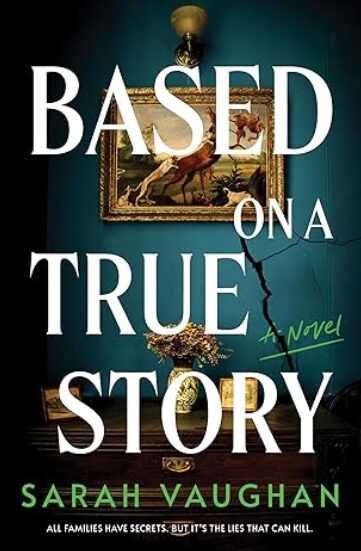
All families have secrets. But it’s the lies that can kill.
A lavish seventieth birthday party. A body found on a storm-lashed beach. And a secret that someone is dying to tell. . . .
Famed children’s author Dame Eleanor Kingman has summoned her family and friends to her exquisite manor house on the cliffs. They’re celebrating her birthday—and her latest number one bestseller in her series of books based on a mother fox and her cubs.
But the night before the party, Eleanor receives an email that threatens to expose the lie she’s kept up for over half a century.
Someone knows her secret. Is it her estranged literary agent? Is it her ex-husband, to whom she no longer speaks? Is it the nanny she fired all those years ago, who always did have a knack for storytelling? Or is it one of her three daughters, all of whom have a stake in the publishing empire she has built…
With a television crew arriving to film a documentary of her life, Eleanor needs to find out who sent the email—and preserve her legacy and multimillion-pound career.
But when push comes to shove, and it’s time to tell the truth will anyone actually believe her?
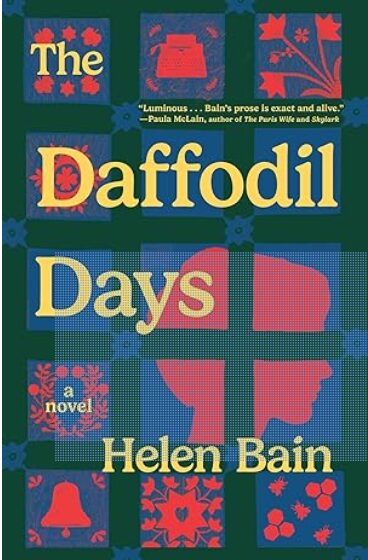
In the early 1960s in a small English town, the church bells ring. The people go about their days, catching glimpses of one another.
There’s the local doctor, who knows more about his patients than he would sometimes prefer. There’s the young assistant at the dress shop, who understands that the ladies who come there for a new outfit are often hoping to find a new self. There are the men who ring the tower bells at the church three times a week, the notes, harmonious and clashing, rippling out across the rooftops of the town.
Among all these lives, one young couple moves into focus. New to the town with their small daughter, they have escaped London for a quieter existence at Court Green, the thatched house beside the church. The life they intend to build—out of secondhand furniture stenciled with hearts and flowers, expertly cooked suppers for weekend guests, and devotion to the work that matters to them both—will be a good and happy one.
The Daffodil Days depicts a pivotal year in the marriage of 20th-century literature’s most infamous couple, primarily the wife: Sylvia Plath. It is a kaleidoscopic portrait of this enigmatic writer, refracted through the rich inner lives of a rural community caught, if only for a moment, in her light. Here, Sylvia is capable and charismatic, vulnerable but strong, full of spirit.
For fans of literary and historical fiction, The Daffodil Days offers a poignant glimpse of a life reimagined. The lasting impression is not of what breaks us but what binds us: resilience, creativity, and love.
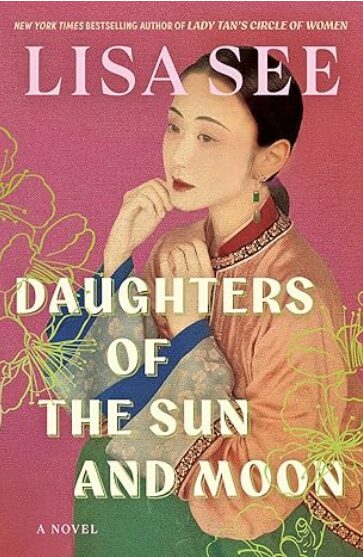
In 1870, three Chinese women arrive in the small, dusty, and violent pueblo of Los Angeles. Dove, the bound-footed daughter of an imperial scholar, is entrancing and innocent. These characteristics should bring her great rewards, beginning with her arranged marriage to a much older merchant. Petal, the big-footed daughter of peasants, has grown up hungry and with dirt between her toes. In a moment of desperation, Petal’s father sells her to buy money for rice seed, and she is loaded onto a ship to the Gold Mountain—America—where she is once again sold. Moon is married to a doctor of traditional Chinese medicine. She is educated, speaks fluent English, and has been endowed with a face of great beauty, yet her failed footbinding as a child has left her with a limp that lessens her value in the eyes of many.
Each woman has her own desires. Dove wants to love and be loved, Petal desires freedom, and Moon seeks justice. Together they face a larger society that wishes them not one ounce of good will. Anti-Chinese sentiment is strong in Los Angeles, and this eventually leads to the Night of Horrors during which all three women are challenged in ways they could not have imagined. Brought together by hardship and heartbreak, they must use their bravery, endurance, and ability to “eat bitterness” to discover their voices, find freedom, and connect through solace and friendship. Together they are daughters of the sun and moon.
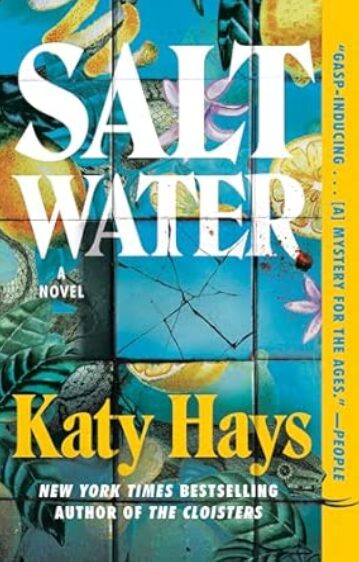
In 1992, Sarah Lingate is found dead below the cliffs of Capri, Italy, leaving behind her three-year-old daughter, Helen. Despite suspicions that the old-money Lingates are involved, Sarah’s death is ruled an accident. And every year, the family returns to prove it’s true. But on the thirtieth anniversary of her death, the Lingates arrive at the villa to find a surprise waiting for them—the necklace Sarah was wearing the night she died.
Haunted by the specter of that night, the paranoid, insular Lingate family begins to crack, and Helen seizes the opportunity with the help of Lorna Moreno, the family assistant. But then Lorna disappears, and the investigation into Sarah’s death is reopened. Everyone who was on Capri thirty years ago remains a suspect—Helen’s controlling father, Richard; her rarely lucid aunt, Naomi; her distant uncle, Marcus; and their circle of friends, visitors, and staff. Even Lorna, her closest ally, may not be who she seems. As long-hidden secrets about that night boil to surface, one thing becomes clear: Not everyone will leave the island alive.
Combining a glittering, dark atmosphere, morally-gray characters, and mind-bending twists, Saltwater is an exploration of the corrupting effects of generational privilege and the lengths people go to protect a legacy—and how no one can hold a grudge like family.
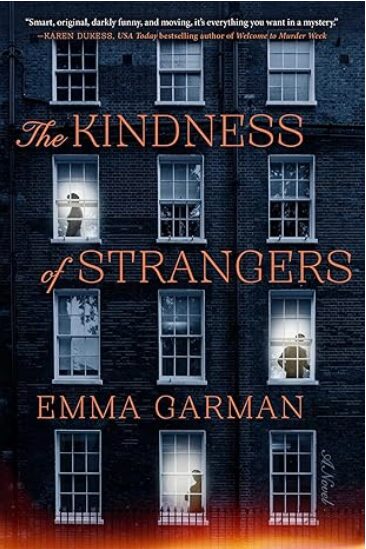
London, 1953. Jimmy Sullivan lies dying on the drawing room floor while his housemates look on, their lives about to change forever.
One foggy night in the dead of February, a young man arrives unannounced at 42 Tregunter Road in Chelsea. Self-styled Bohemian Mrs. Honor Wilson—who runs a minor literary journal and lodgings from this timeworn Victorian house—introduces him to her “dear house guests”: Robbie, the writer; Mina, the teenage sleuth; George, the debutante; and Saul, the haunted refugee. Jimmy Sullivan is a family friend, Honor says—yet clearly, something is not right. Despite everyone’s misgivings, she lets the stranger move into the attic.
As they each try to disprove Jimmy’s dubious account of himself, secrets, jealousies, and disturbing schemes come to light, fracturing the household’s delicate allegiances and setting in motion, unstoppably, a tale of perilous self-invention, complicated love, and murderous revenge.
In a house built on lies, the truth will get you killed.
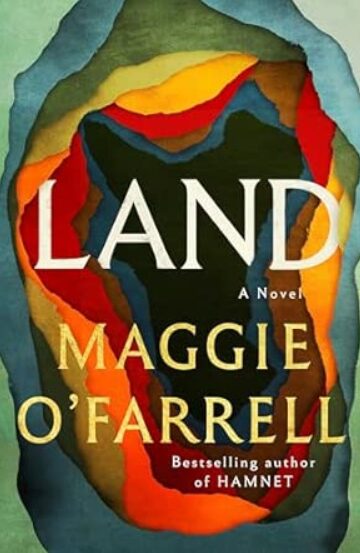
On a windswept peninsula stretching out into the Atlantic, Tomás and his reluctant son, Liam, are working for the great Ordnance Survey project to map the whole of Ireland. The year is 1865, and in a country not long since ravaged and emptied by the Great Hunger, the task is not an easy one. Tomás, however, is determined that his maps will be a record of the disaster.
The British soldiers in charge are due to arrive any day, expecting the work to be completed, but Tomás is unexpectedly sent off course by an unsettling encounter in a copse. His life, and the lives of those of his family, will never be the same again. Liam is terrified by the sudden change in his taciturn father. What was it that caused such cracks to open in Tomás, and how is Liam, aged only ten, going to finish the mapping and get them both home?
Land is a novel about separation and reunion, tragedy and recovery, colonization and rebellion. It is a story of buried treasure, overlapping lives, ancient woodland, persistent ghosts, a particularly loyal dog, and how, when it comes to both land and history, nothing ever goes away. As spellbinding and varied as the landscape that inspired it, Land is, above all, a story of survival, for our times and for all time.
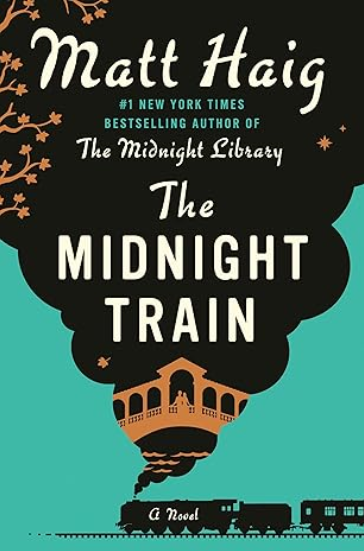
No one can change the past, but the Midnight Train can take you there.
The chance to re-live the moments that meant most.
To see what kind of person you really were.
For Wilbur his best days were with Maggie, the love of his life. On his honeymoon in Venice.
Before he gave it all away.
He wishes he could go back and live differently. But to do so risks everything . . .
A magical, time-travelling love story, from the world of The Midnight Library.
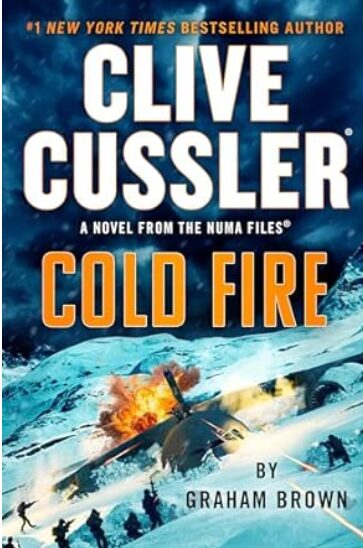
In the frigid air high above the Arctic Ocean an American C-17 carrying a cutting-edge laser of immense power, successfully shoots down a ballistic missile nearly four hundred miles away. Before the celebration can even begin, the aircraft goes dark, vanishing off radar and disappearing into mist at the top of the world.
As the details emerge it becomes obvious that the aircraft has been hijacked, the crew murdered at their stations. Its last known heading would take it directly to Russia, but the CIA insisted it never arrived. An odd signal suggests it crashed into the Arctic Ocean halfway between Norway and the North Pole. In a tense meeting the President asks how deep the waters are in that area. Not deep enough, is the answer.
Russian ships are seen putting out to sea in large numbers. Chinese vessels are spotted north of Norway. The only American asset in the area is a small research vessel operated by NUMA. The President orders NUMA to send it into the fray. Kurt Austin and Joe Zavala lead the search but soon find that all is not as it seems. The Chinese were waiting for the planes arrival, the Russians had expected it to land on their territory and now all three are closing in on a shooting war to keep the others from finding the missing plane.
With the rules of engagement suspended and lives hanging in the balance, Kurt and the NUMA special projects team pull on the threads connecting the mystery only to discover the great nations of the world being manipulated by a single man with a deadly plan of revenge.
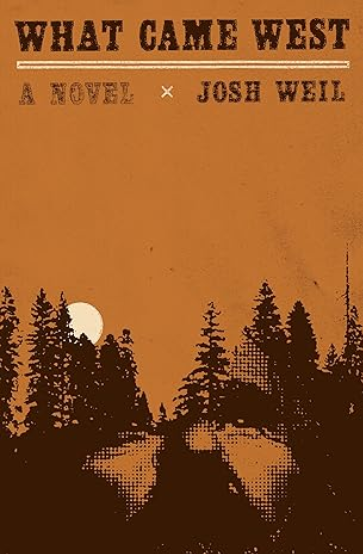
Sierra Nevada, 1840s, just before the Gold Rush ignites. Silas Hall has never belonged anywhere except the wild. Bullied as a child and uneasy even within his own family, he finds brief solace in love and fatherhood before the pull of the frontier overwhelms him. One day he heads west, chasing a life that might finally make sense.
What follows is a swift, pulse-pounding journey into the mountains, where Silas becomes one of the first white settlers to cross into the Sierra Nevada. He forges a precarious peace with the Indigenous people who live there—until the Gold Rush crashes in with violent force. As thousands flood the region, the balance shatters, and Silas commits murder, a desperate act that alters the course of every life around him, including his own.
Taut and propulsive, What Came West is told in two parallel voices—one a tense, third-person account of Silas on the run, and the other a confessional letter from Silas to the son he left behind—and confronts many different forms of American inheritance, in all its danger, emotional voltage, and mythic momentum. Weil’s masterpiece is a fierce, heart-driven portrait of an outsider racing toward belonging and barreling headlong into consequence.
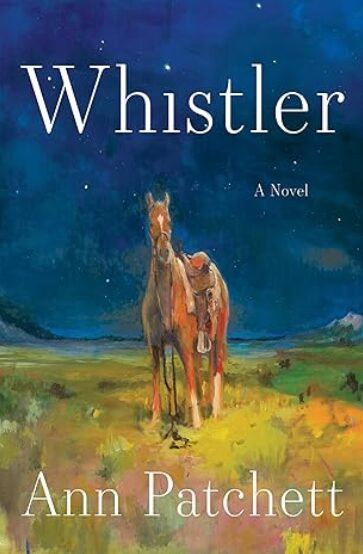
When Daphne Fuller and her husband Jonathan visit the Metropolitan Museum of Art, they notice an older, white-haired gentleman following them. The man turns out to be Eddie Triplett, her former stepfather, who had been married to her mother for a little more than year when Daphne was nine. Now fifty-three, Daphne hasn’t seen Eddie for many years, not since the fateful event that changed the direction of both their lives. Meeting again, time falls away; while their relationship was brief, it had a profound impact on them both, and now that they are reunited, they have no intention of ever being separated again.
Whistler is a story about two adults looking back over the choices they made, and the choices that were made for them. It’s a story about bravery, memory, the often small yet consequential moments that define our lives, and the endless stream of loss that in time comes for us all. Beautiful in its simplicity, it is ultimately about how love endures, and how the feeling of being known by one other person, even for a short period of time, can change everything.